
5 Things We Do to Support a Calmer Return to School
The return to school after two full weeks off can be a lot. It is a lot — for kids, for parents, for the entire family system. Routines shift. Expectations change. Time with mom and dad looks different. Sleep schedules slide. Meals aren’t as predictable. There’s a lot to unpack.
If you’re reading this and you’ve just returned to work yourself, you might be struggling to find motivation or focus.
Now imagine if you were five and returning to school after several weeks filled with:
people are in your house more than usual
you’re waking up later and going to bed later
you’re eating at different times
you’re going to camp instead of school
mom and dad are both home a lot more than usual
And now imagine you’re five and autistic.
That perspective shift matters.
Over the years, we’ve learned a lot about how to support our children through changes in routine — especially the transition back to school. We’re not perfect, but we’ve finally found a rhythm that works for our family.
We tried traditional visual schedules and boards, but we struggled to keep up with them consistently. Our son Jake, who is almost six, is autistic and hyperlexic — he started reading before he was two. We noticed that written language helped him process expectations more easily than pictures alone.
So we adjusted.
Here are five things we do to support our kids during transitions like returning to school — and maybe they’ll help your family too.
1. We overcommunicate (verbally and visually)
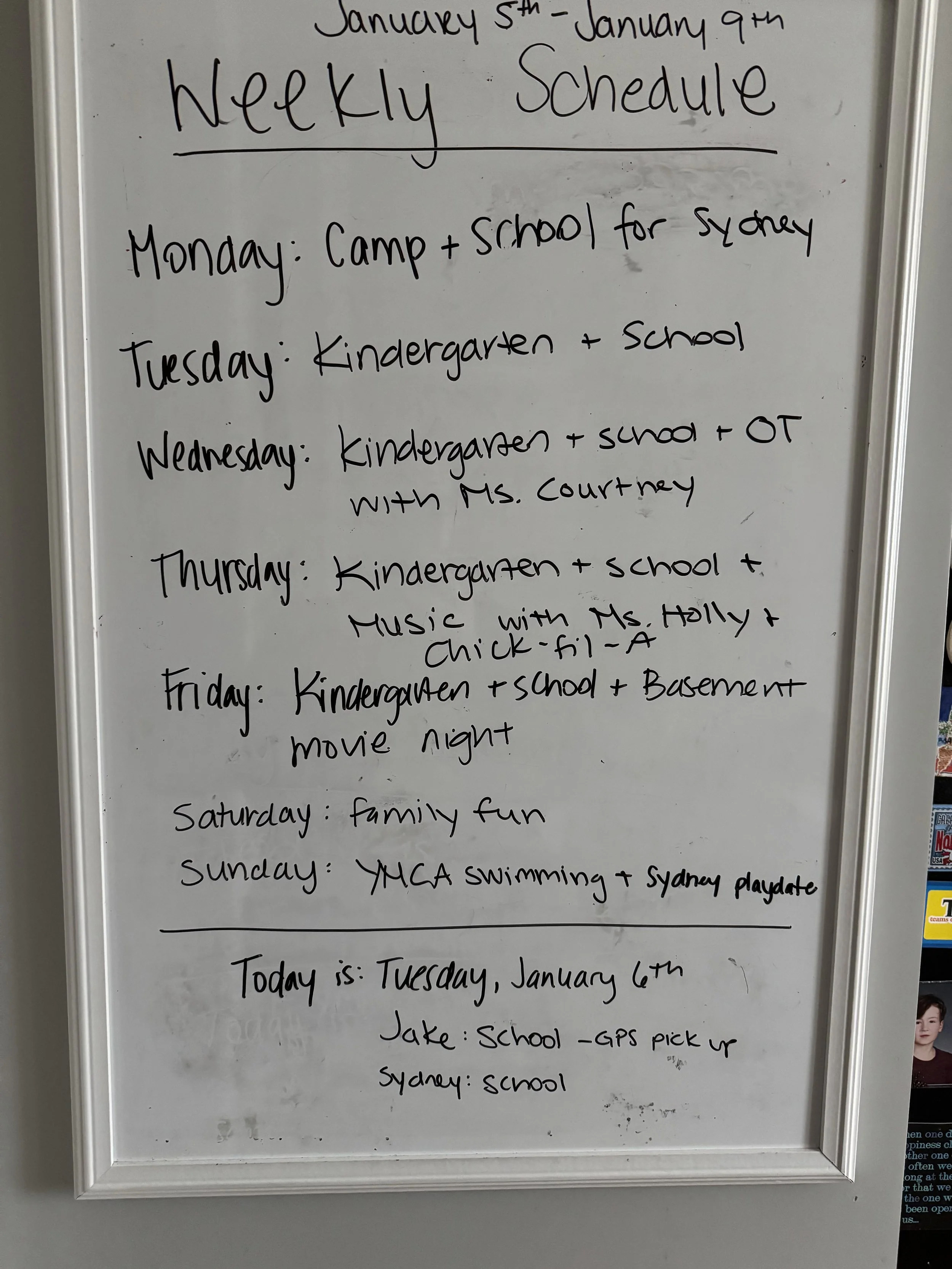
a non Pinterest worthy weekly schedule that works for our family!
We don’t assume expectations are understood — we make them visible.
In our kitchen, we use a large whiteboard to write out:
the week ahead (their weekly schedule ie. : Thursday: School, Music Therapy with Ms. Holly, and then Chick-Fil-A!)
the next day’s schedule - we write the date: Today is, Wednesday January 7th Jake has school, OT and sydney has school with daddy picking up
any new or returning routines (Dentist appointment)
And have visuals for things like:
“Home → wash hands → change clothes → play”
Seeing expectations written down reduces anxiety and helps our kids feel prepared.
Overcommunication isn’t about control — it’s about predictability. I realized how helpful this was only when I realized I needed it for myself.
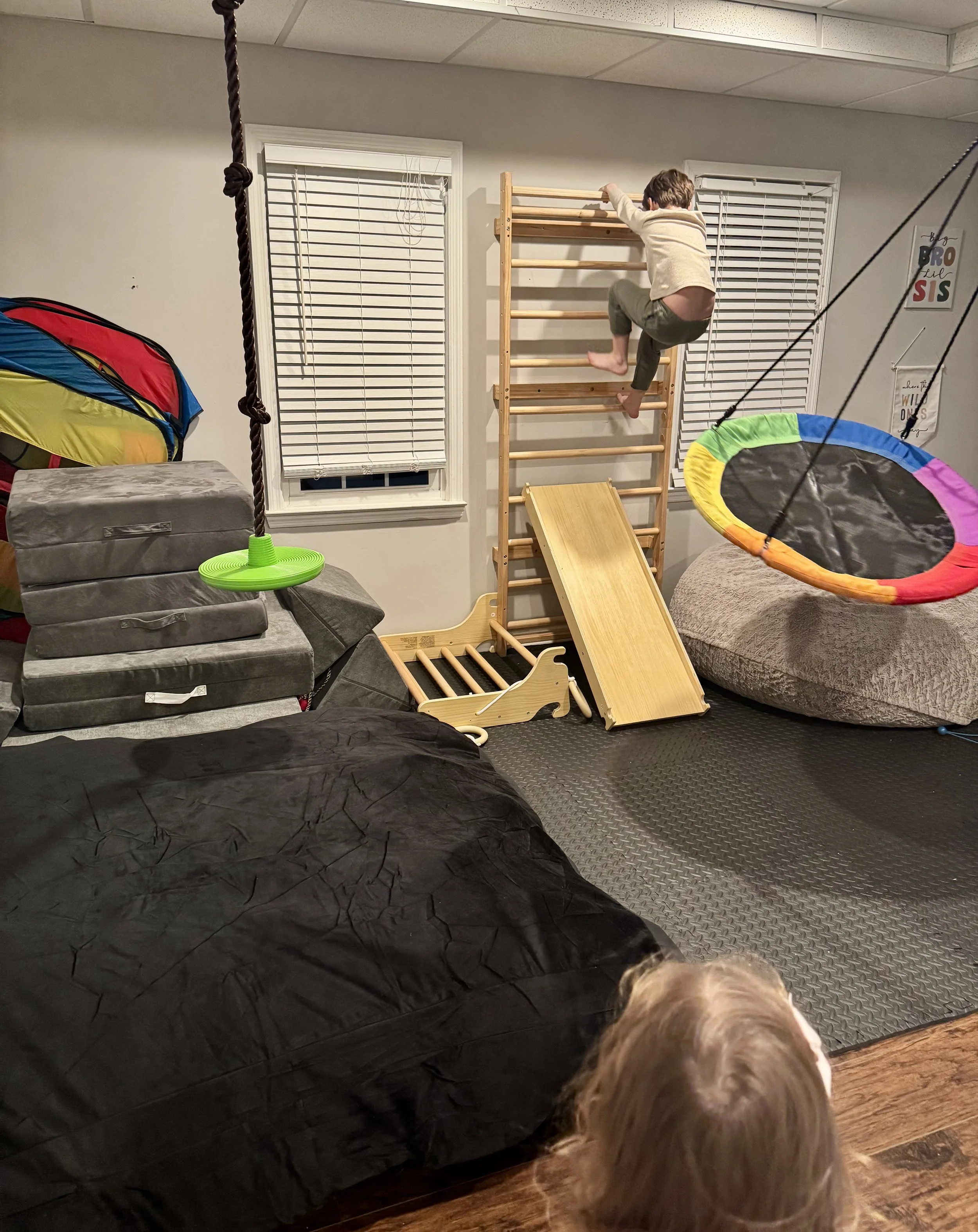
2. We prioritize movement and regulation
Movement is regulation, not a reward. Over the years, we’ve added sensory equipment to our home to support our sensory-seeking five-year-old. This past Christmas, we built a sensory gym in our basement with opportunities for climbing, swinging, and heavy work.
That said — you absolutely do not need a sensory gym to support regulation.
Simple movement after school can include:
time outside
jumping or climbing at the playground
carrying groceries or laundry
stretching, dancing, or swinging
The goal is helping the nervous system reset after a long day.
3. We expect skills to look “rusty” — not lost
During winter break, Jake became fully pee potty trained. When he returned to school, did I wonder if accidents might happen? Absolutely.
Was I upset about it if that did happen? No.
Transitions can temporarily impact skills… that doesn’t mean regression. It means the nervous system is adjusting. We treat these moments as information, not failure, and give kids time to recalibrate.
4. We front-load connection
Before expectations come connection.
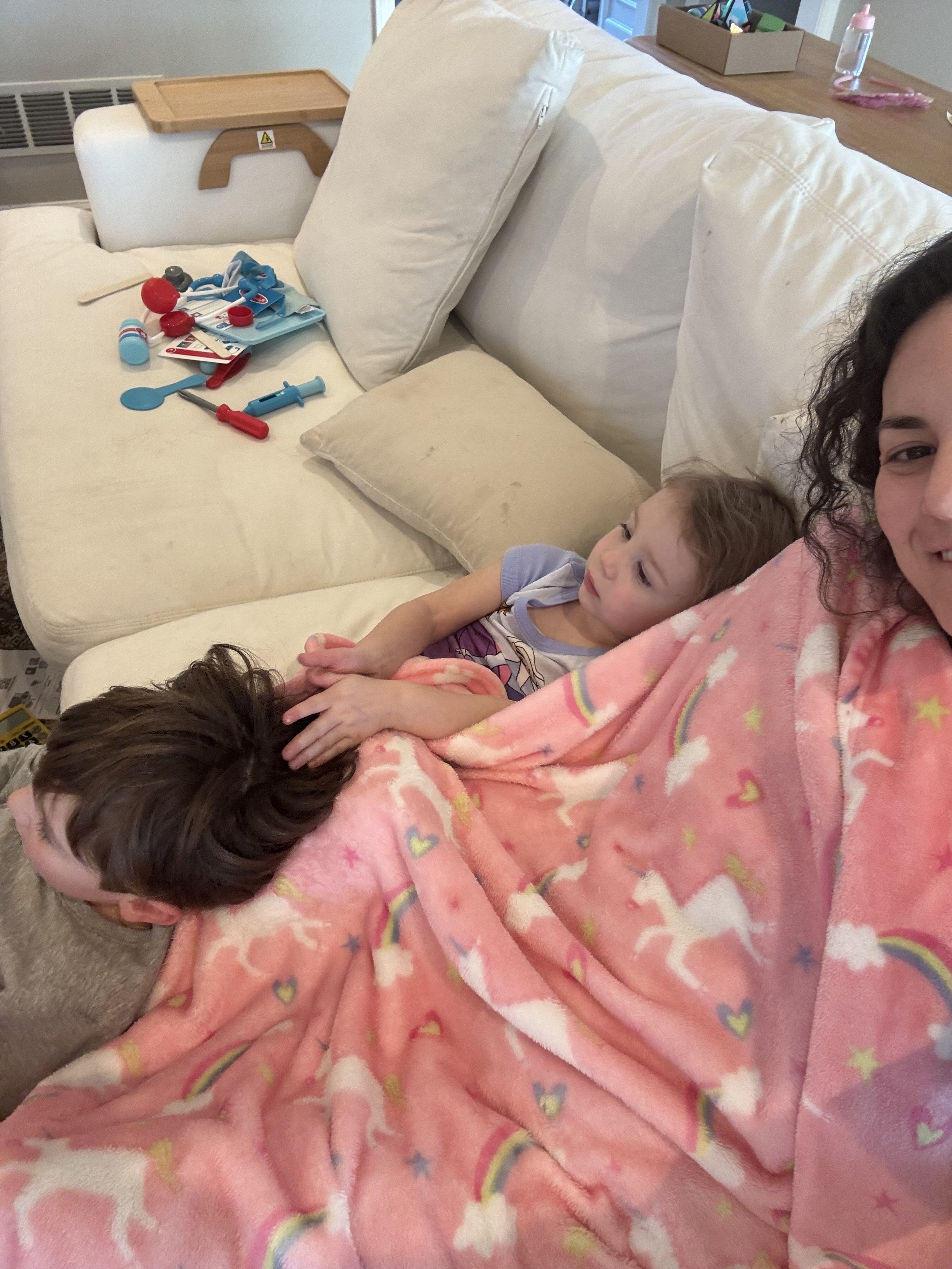
The Tuesday morning before Jake returned to school, I could tell he was feeling anxious. So we sat on the couch, sang silly songs about quesadillas, and snuggled under a blanket.
Did it push back the rest of the morning? Yes.
Was it the most important part of the morning? Also yes.
That moment of connection helped him feel secure and grounded before a big transition.
5. We keep some routine during breaks (when possible)
This one is proactive — and it made a huge difference for us.
Jake attended winter break camp for one week, and after our extended family visited during Christmas. He went to camp for four hours a day. Compared to last year’s break where he had very unpredictable schedule with no camp, therapy, or anything with structure (which, frankly, was a disaster), he thrived.
The structure, movement, social engagement, and predictable rhythm helped him — and helped both my husband and me regulate as parents.
Because of that experience, Jake is already signed up for eight weeks of summer camp. The structure isn’t just good for him — it’s good for our whole family.
A final note
The return to school isn’t about pushing harder or expecting kids to “snap back.” It’s about re-establishing safety, predictability, and connection.
Not every strategy fits every child and that’s okay. Choose what feels supportive right now. Try one thing, doesn’t have to be all of them because I know — I know, your plate is already very full.
Remember as you get situated in January you’re not behind. You’re navigating a transition — and that matters.
Lastly, these transitions don’t have to be navigated alone.
At CAE, we share resources, guidance, and community insight to help families move through change with clarity and confidence.